Should You Reply to Cold Email Leads From the Same Mailbox That Sent the Campaign?
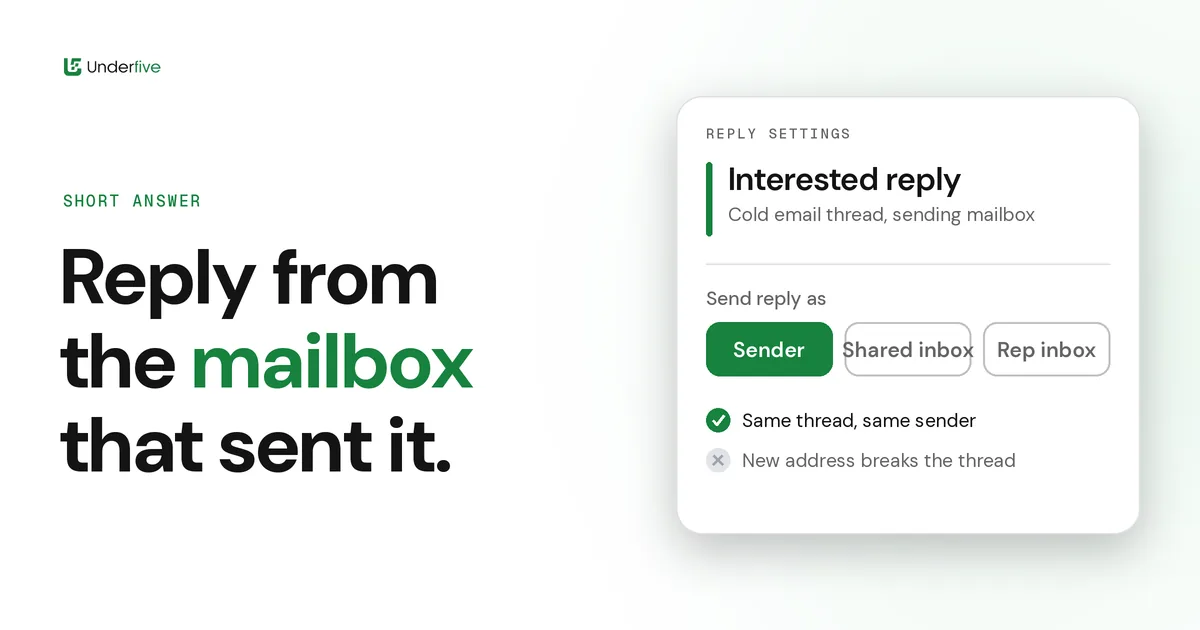
Yes. In almost every case, the first reply to a cold email lead should come from the same mailbox, in the same thread, that sent the campaign. The prospect replied to a person and an address they recognise; answering from somewhere else breaks the thread, confuses them, and can look like a bait and switch. Move the conversation to another address later, once there is a reason the prospect will understand.
Why the original mailbox matters
The thread stays intact. Email clients group messages by subject and reply headers. A reply from the original mailbox lands under the prospect’s own message, with your earlier emails underneath for context. A fresh email from a different address often starts a new thread, and the context is gone.
The sender stays the same person. The prospect replied to a name. If the answer comes from a different name, or from a generic address, they have to work out who this is and why it changed. Some will not bother.
It avoids looking like a handoff to sales. A switch from “Sam” to “sales@” right after someone shows interest feels like being passed down the line, which is the opposite of what a warm reply deserves.
It keeps your records clean. When replies come from the sending mailbox, the whole conversation sits in one place and the campaign gets credit for the meeting.
Your options compared
| Reply from | Thread intact | Prospect recognises sender | Good for |
|---|---|---|---|
| Original sending mailbox | Yes | Yes | First reply, booking, most follow-ups |
| Shared or team inbox | Usually no | No | Internal triage, not prospect-facing replies |
| Rep’s or founder’s own mailbox | No | Only if introduced | After an explicit handoff the prospect agreed to |
When it is fine to switch
There are a few good reasons to move the conversation:
- A handoff the prospect expects. “I’m looping in my colleague who runs onboarding” works, as long as the introduction comes from the original sender, in the original thread, with the new person on copy.
- The sending mailbox is being retired. Introduce the new address in the thread before the old one stops being monitored.
- The prospect asks. If they want a different contact or channel, follow their lead.
What does not count as a good reason: “our reps prefer to work from their own inbox.” That is a tooling problem, and it is solvable.
How to do it with many sending mailboxes
The hard part is not the principle. It is that outbound teams and agencies often run dozens of mailboxes across several sending tools, so replies are scattered and replying from the right one is tedious. A unified inbox for cold email brings every mailbox into one view and sends each reply back through the account that received it, so the team works from one place and the prospect still hears from the same sender.
If you also run LinkedIn, the same rule applies there: reply from the account that started the conversation. See one unified inbox for LinkedIn and email replies.
Agencies have an extra question, which is whether the agency or the client should be the one answering at all. That is covered in who should reply to cold email leads.
FAQ
Will replying from a cold sending mailbox hurt deliverability? A reply to someone who wrote to you is normal, wanted email, and it is the kind of two-way conversation mailbox providers expect to see. We cover the details in do email replies improve deliverability.
What if the sending mailbox uses a secondary domain? Reply from it anyway for the first response. If the deal progresses, introduce the primary-domain contact in the thread so the switch is explained.
Should an AI inbox agent reply from the sending mailbox too? Yes. Wherever the reply is drafted, it should go out from the mailbox and thread the prospect replied to, in that sender’s voice.
Can we copy a rep or account executive on the reply? Yes, and it is often the cleanest handoff. The original sender introduces them in the thread, and the prospect can reply to both.
Underfive brings every sending mailbox and LinkedIn account into one unified inbox and replies through the account each lead wrote to, with AI inbox agents that send drafts to Slack for approval. See how it works for agencies or book a demo.